Mindmapping Introduction
In the first week of the client project our studio Patched started our first brainstorming session on how to approach this project to meet our goals. We did this by using a brainstorm method called Mind mapping. The Mind map is used as a diagram for representing tasks, words, concepts, or items linked to concept or subject. This allows us to give an overview of the information and recall the data much easier.
The mind map was based on the project briefing which was about making an personalized story generator powered with AI given as a project by our client from Stuurmen. We’ve made 2 mind maps and solutions on this topic.
First mindmap creation
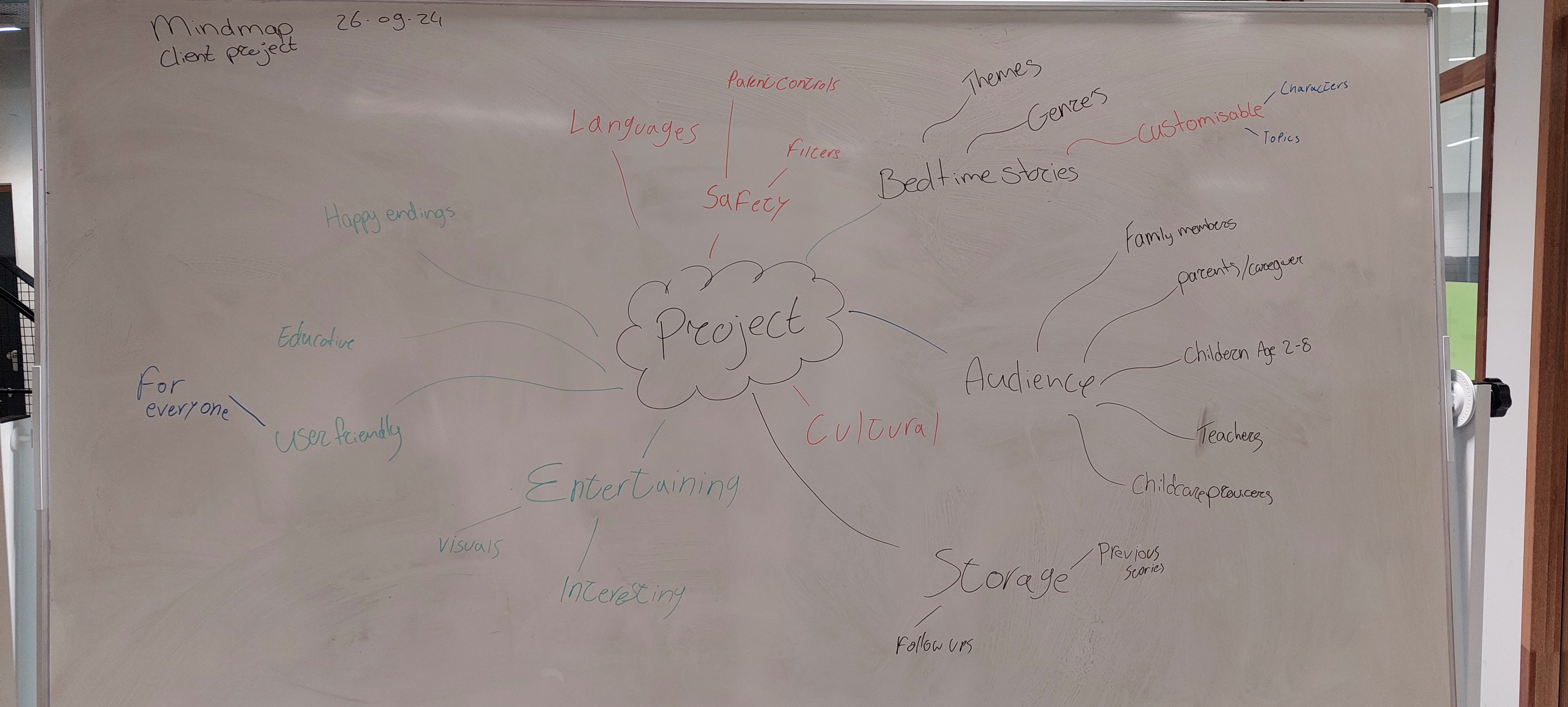
Cluster topics Fairytales AI
In the beginning we started focusing on the briefing of our project regarding personalized story generator and the requirements according to the briefing we’ve received by Stuurmen. Above you can see the results on each topic. I have divided the branches in 3 categories. Main branches, sub-branches and child branches and the colours indicate that they are relatable.
Explanation of the mindmap
The project – personalized AI story generator is in the center of the map. As I’ve shown above there are 7 main branches spread out from the center, which are our main point-of-interests.
1. Audience
- This is the target group we are aiming for to eventually sell our product to them and it’s intended for both adults and children. Adults the decision-makers and may purchase or approve the use of the product for their children. They also value features that promote creativity, education, or bonding.
Sub Branch: Parents, Family members, Children (age 2-8), Teachers and childcare providers.
2. Cultural
- This is where we want to adapt our product to different cultural preferences and sensitivity. We must avoid stereotypes and respect cultural norms to ensure they resonate with diverse users and avoid offense.
3. Entertaining
- The purpose of entertaining in our product is to engage users, provide enjoyment, and create a positive and memorable experience.
Sub Branch ideas: Visuals and User Interests
4. User Friendly
- A user-friendly design is essential for a personalized AI story generator to ensure a smooth, enjoyable, and accessible experience for all users.
Sub Branch ideas: Everyone (Every user that makes use of our product, even the ones who fall outside the target audience)
5. Safety
- The purpose of safety in our product is to protect users, their data, and their overall experience by creating a secure and trustworthy environment.
Sub Branch ideas: Filters and parent controls
6. Languages
- Similar to cultural, options for different languages within our app is crucial so users with diverse native languages can have an user friendly experience on our app.
7. Storage
- This is key to the secure handling, management, and protection of stored data to ensure it remains confidential, intact, and accessible to the users who are using our product.
Sub Branch ideas: Follow ups and previous stories.
Conclusion
The mind map that I’ve created with my group serves as a tool for organizing and visualizing the key components we need to fulfill the requirements for our AI story generator project. It effectively breaks down the project into the several branches. By categorizing these into main and sub branches, I was able to understand the relationships better between the core ideas and their specific details. Now we have the bigger picture, This brainstorming method will also prepare me for the upcoming researches we will conduct in the upcoming weeks.
Second mindmap creation
Now we have a clear structure about our requirements for the project, we’ve started to think about our next steps on what to do. We made another mindmap focused on our group planning, research and the questions we will ask to the client. As shown below.
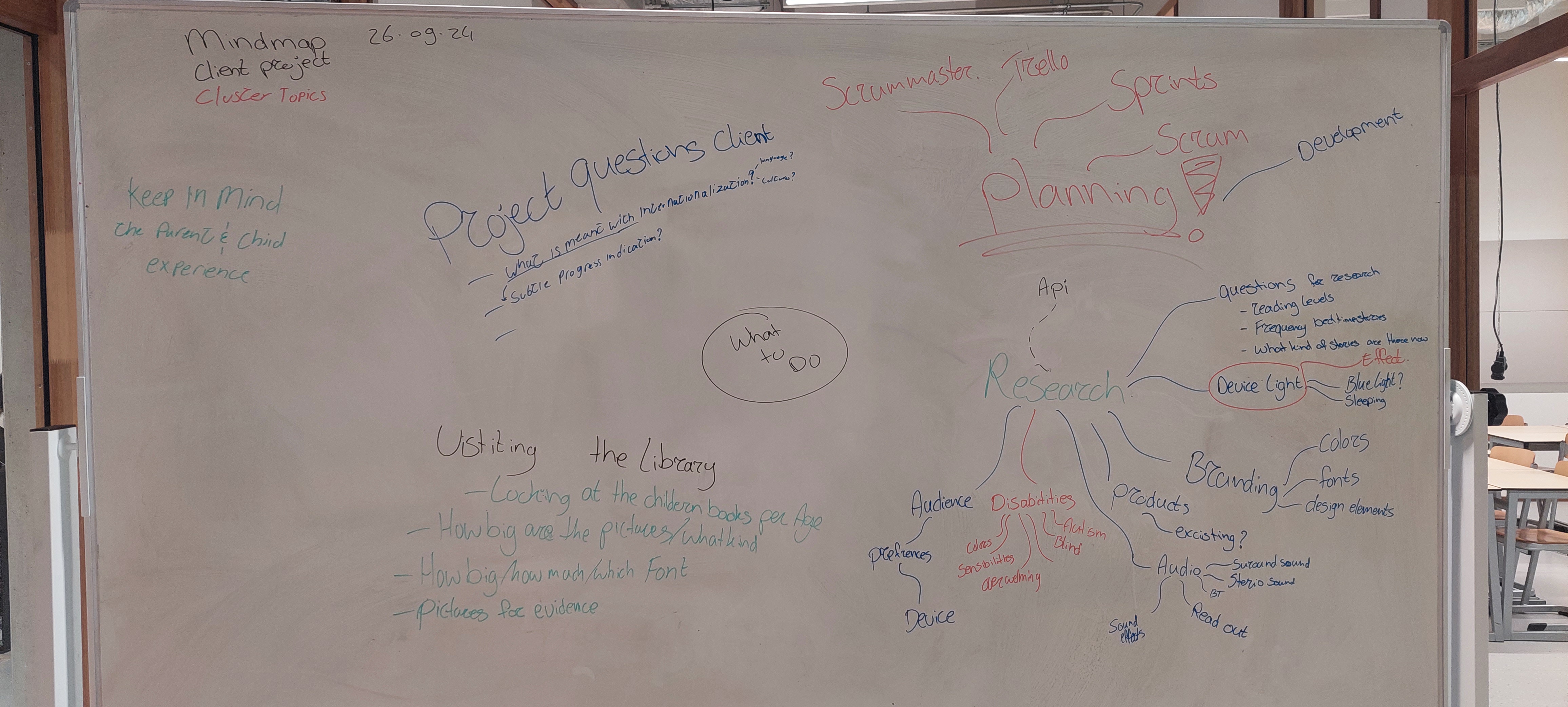
Explanation on the “what to do” mindmap
Planning
We started by making a project plan and deciding who in our group would take on the role of scrum master and which tools we’d use throughout the project. I was chosen as the scrum master, meaning I’ll be responsible for managing the team and communicating with the client whenever we need to arrange something or ask for support. We’ll work in sprints, with each sprint ending in a presentation for the stakeholder. Everything will be done following the Scrum method, a framework that helps us stay organized and work toward a shared goal.
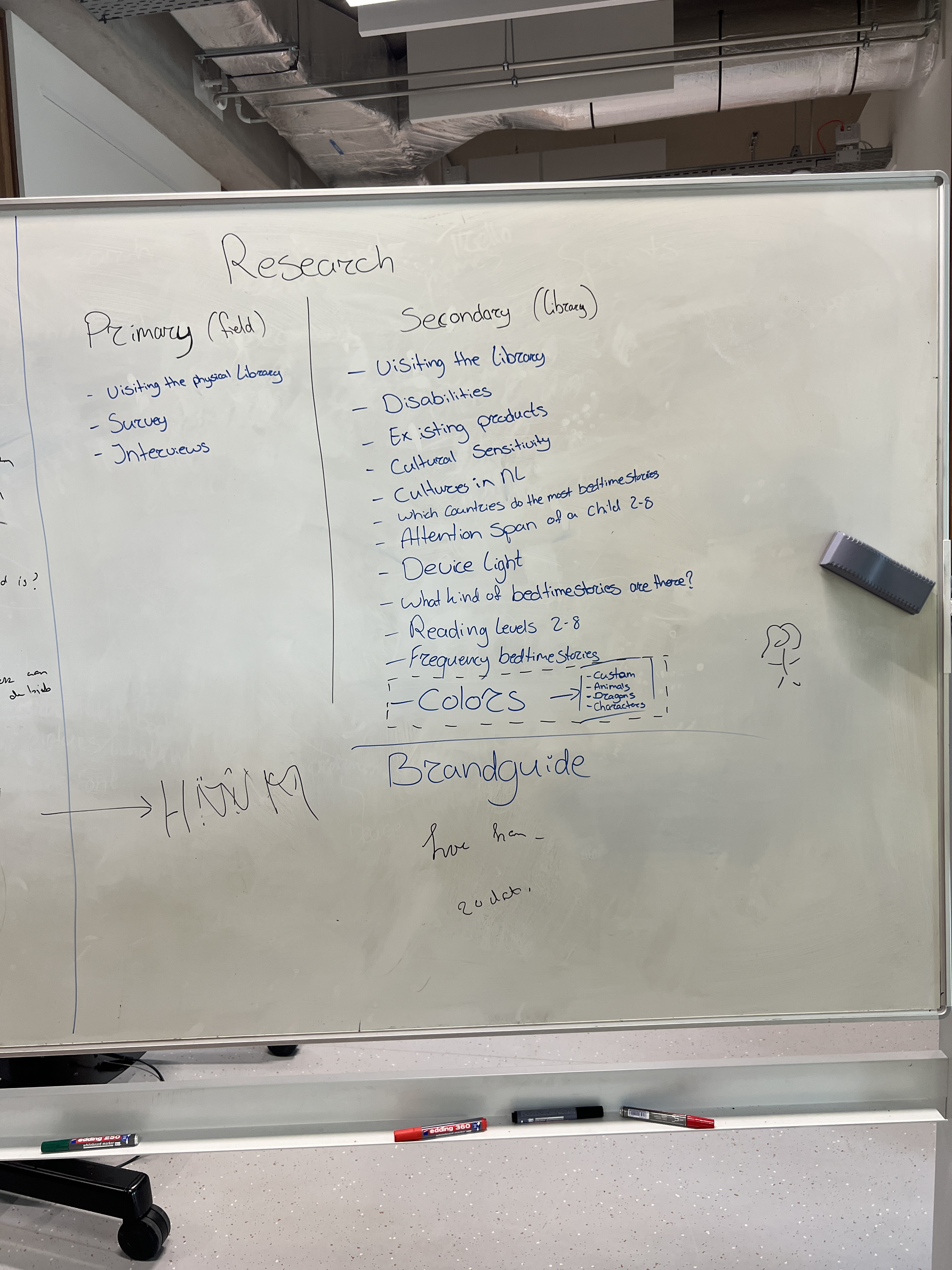
Research
We are conducting our research following the double diamond phases, splitting it into primary and secondary research, as explained above.
Primary Research
Our primary research uses the CMD field method, focusing on surveys, interviews, and library visits. This means collecting data directly from real-life sources. It gives us relevant and unbiased information that’s directly connected to our topic. By conducting surveys, interviews, and visiting libraries, we’ll gain a deeper understanding of our target audience’s preferences, behaviors, needs, and opinions.

Secondary Research
For the secondary research, we’ll use the CMD library methods. All topics from our mindmap will be explored through literature studies, this will be done fully online using digital libraries, academic databases like Google Scholar, online journals and e-books. To organize our ideas, we created a problem statement or central question, which we then broke down into sub-questions. This helped us dive deeper into how we can reach our research goals for the personalized AI storybook generator project.
Reflection
With a clear structure in place, we’ve made significant progress by creating a second mind map focused on planning, research, and client communication. Assigning roles, especially choosing a scrum master, has helped us organize our workflow effectively. Following the Scrum method ensures that we stay on track and work toward our goals in a structured way. Our research approach is well-defined, combining primary research methods like surveys, interviews, and library visits with secondary research through online literature studies. By breaking down our central question into sub-questions, we’ve created a strong foundation for exploring our topic in depth. This organized approach will guide us as we work toward developing the personalized AI storybook generator. Moving forward, me and studio peers will do the primary research together, but will split the secondary research between the 4 of us so the tasks are equally divided. We have to keep in mind to not being strict on technical possibilities or instantly focusing on an idea we have in mind, but do research and make concepts first.